Lower back pain is one of the most common complaints in New Zealand. Whether it’s from sitting at a desk too long, lifting something the wrong way, or just sleeping in a strange position, most of us experience a sore back at some point. Sometimes it’s short-lived and other times it can stick around and disrupt daily life. The good news? Many people find relief through targeted exercise, especially when guided by a qualified personal trainer Oxshott residents trust for safe, corrective movement.
This guide will walk you through the best exercises for lower back pain, explain why they help and show how to include them safely in your routine. We’ll also talk about the right time to visit professionals and how services such as My Home Personal Trainer can help you build an improved, pain-free back, whether you’re working on your own or with the assistance of a personal trainer Windsor customers can count on for support in a structured manner.

Why Exercise Helps Lower Back Pain
For years, people were told to rest when their backs hurt. But research now shows that staying active and moving in controlled ways can reduce pain and improve function. Movement increases blood flow, releases feel-good chemicals in your body and supports the muscles that protect your spine. Strengthening these muscles helps take pressure off sensitive structures in the lower back, and regular movement stops stiffness from building up.
However, it’s crucial to select the correct exercises. Certain moves may cause discomfort worse if performed in a hurry or with poor technique. This is where the guidance of an experienced coach, such as a personal trainer Bagshot locals have worked with, can make a difference. The aim isn’t to push through pain, but to increase strength and flexibility slowly.
Gentle Movements to Start With
If your pain is recent or quite sharp, start with gentle movements. These help loosen tight muscles and increase comfort without strain.
- Pelvic Tilts
Pelvic tilts are one of the simplest and most effective movements for back pain relief.
How to do it:
- Lie on your back with knees bent and feet flat on the floor.
- Gently flatten your lower back against the floor by tightening your tummy muscles.
- Hold for a few seconds, then relax.
- Repeat this 10–15 times. This small movement engages your deep core muscles, which support the spine and are often emphasised by a personal trainer Esher clients choose for rehabilitation-focused training.
- Cat-Cow Stretch
This exercise improves mobility in both your spine and hips.
How to do it:
- Start on hands and knees.
- Arch your back up like a cat, tucking your chin to your chest.
- Then slowly lower your belly, lifting your head and tailbone up toward the ceiling.
- Move slowly and breathe through it. Do 10 rounds to ease stiffness and improve spinal flexibility.
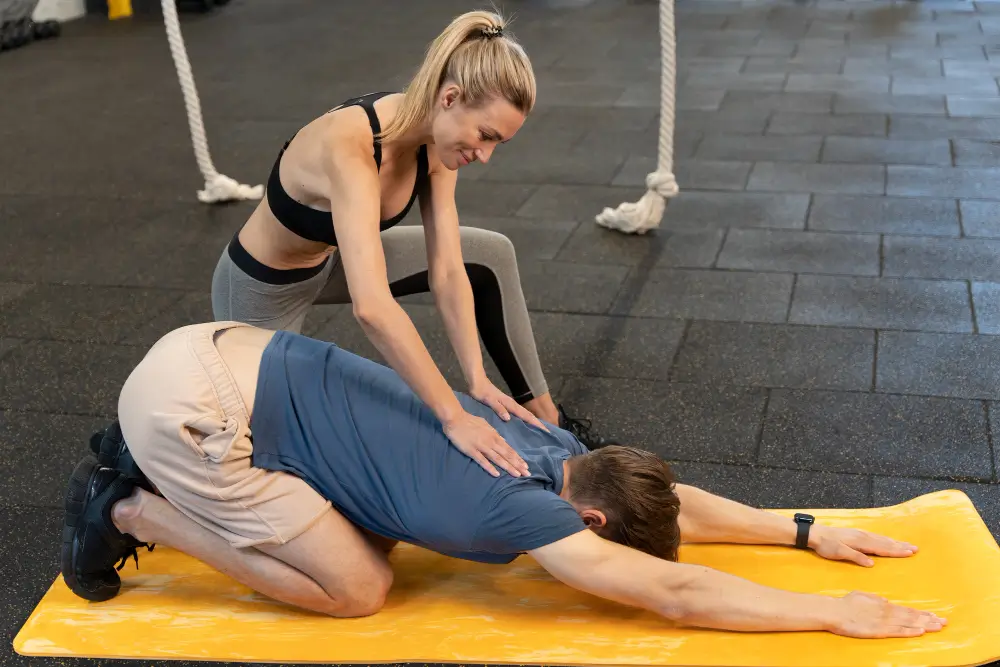
- Child’s Pose
A child’s pose is a gentle stretch that relaxes the lower back.
How to do it:
- From hands and knees, sit back toward your heels.
- Stretch your arms forward and allow your forehead to rest on the floor.
- Stay here for 30 seconds to one minute. Many people working with a personal trainer Ashford based programme use this stretch as part of their daily recovery routine.
Strengthening Exercises for Long-Term Support
Once your pain starts easing, you can progress to strengthening exercises. These help your core, hips and legs—all of which play a role in supporting your lower back.
- Bird-Dog
- The bird-dog strengthens your core and lower back while improving balance.
- From hands and knees, extend one arm forward and the opposite leg back.
- Hold briefly, then switch sides.
- Keep movements controlled and smooth. This exercise is commonly prescribed by a personal trainer Oxshott professionals recommend for building stability without strain.
- Bridge Exercise
- Bridge exercises work your glutes and hamstrings, which support the lower back.
- Lie on your back with knees bent and feet flat.
- Press through your heels, lift your hips, and squeeze your glutes.
- Lower slowly.
- Repeat 10–15 times. Strong glutes help reduce stress on the lower back during daily activities—a key focus for any experienced personal trainer Windsor programme.
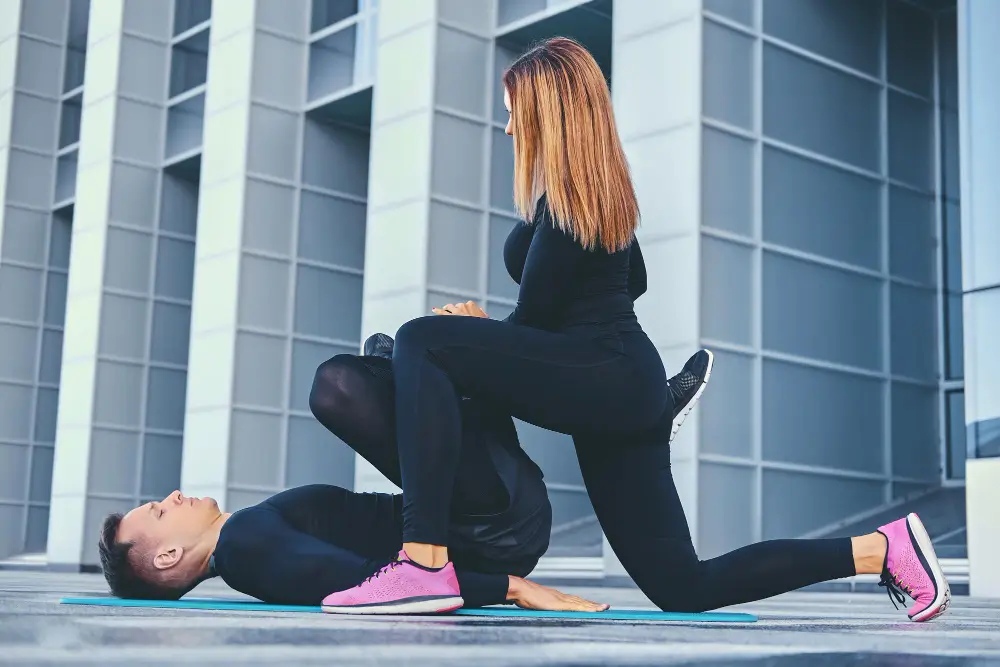
- Hip Flexor Stretch
- Tight hip flexors can pull on the lower back and increase discomfort.
- Step one foot forward into a lunge position.
- Gently shift forward until you feel a stretch in the hip of the back leg.
- Hold for 20–30 seconds on each side.
- This stretch is especially useful for people who sit for long periods and is often highlighted by a personal trainer Bagshot residents turn to for posture correction.
What About Walking and Everyday Movement?
Simple activities like walking can be incredibly helpful for people with lower back pain. It keeps your body moving without heavy strain, improves circulation and releases tension. Walking for a short distance can help in the recovery process and supplement structured sessions that include the help of a personal trainer Esher who focuses on long-term mobility.
Aim for gentle, consistent movement. If you are feeling uncomfortable, you are experiencing discomfort; reduce the speed and lengthen your stride, rather than abruptly stopping.
When to Get Professional Help
Most people can manage mild to moderate back pain with the right exercises. However, consult a doctor when pain persists, moves down the leg or is associated with numbness or weakness.
A qualified trainer or physiotherapist will evaluate your movements and design a custom-made program. Many people today prefer services such as My Home Personal Trainer, which offer professional guidance from your home or via the internet. This approach works well alongside support from a personal trainer Ashford-based specialist who understands pain-aware programming.
Tips for Staying Safe and Getting Results
- Warm up before exercising.
- Move slowly and with control.
- Breathe properly during each movement.
- Stop if pain feels sharp or intense.
- Stay consistent rather than overdoing it.
Regular check-ins with a knowledgeable coach—whether through My Home Personal Trainer or a local personal trainer Windsor option—can help you stay on track and adjust exercises as your strength improves.
Frequently Asked Questions
Q. What exercises are best for relieving lower back pain?
Ans. Gentle exercises like pelvic tilts, child’s pose and cat-cow stretches help relieve tension, while strengthening moves such as bird-dog and bridges support long-term relief. These are commonly recommended by a personal trainer Oxshott clients work with for safe back rehabilitation.
Q. How often should I do back exercises?
Ans. Start with 10–15 minutes a day, 3–4 times a week. As strength and comfort improve, you can increase frequency and intensity—an approach often advised by a personal trainer Windsor focused on sustainable progress.
Q. Can walking help with lower back pain?
Ans. Yes, walking is a low-impact activity that improves circulation and releases muscle tension, which can reduce lower back pain. Many people combine daily walks with guidance from a personal trainer Bagshot to stay active without overloading the spine.
Q. When should I see a professional for back pain?
Ans. If pain lasts more than a few weeks, or you notice numbness, tingling, or bladder or bowel issues, it’s time to see a professional. A personal trainer Esher, or other qualified specialist can help assess movement patterns and next steps.
Q. Is it safe to exercise with lower back pain?
Ans. Yes, gentle exercises can improve mobility and reduce discomfort when done correctly. Avoid movements that worsen pain and listen to your body—principles often reinforced by a personal trainer Ashford experienced in pain-aware training.
Final Thoughts
There’s no single exercise that works for everyone. Still, a mix of gentle mobility, strengthening and regular movement can significantly reduce lower back pain. Start where you are, progress gradually and don’t hesitate to seek expert help when needed.
With the right plan—and guidance from professionals such as a personal trainer Oxshott, personal trainer Bagshot, or personal trainer Esher—you can move more comfortably, reduce pain, and protect your back for the long term.
If you’re ready to start your journey to a pain-free back, contact us today! Visit us at Elizabeth Avenue, Chertsey, KT16 0SG, or call 07368 699 204 for personalised exercises and guidance. You can also reach us via email at info@myhomepersonaltrainersurrey.co.uk to book your session now.

Company Director & Lead Personal Trainer — 16+ Years Experience
Lawrence founded My Home Personal Trainer Surrey in 2019 with one clear goal: to make expert personal training genuinely accessible for everyone in Surrey — without the gym. With over 16 years in the fitness industry, he noticed that great trainers and motivated clients often couldn't find each other, and that traditional gyms were getting in the way of real results.